In today’s digital environment, instant communication is no longer optional. SMS is a tool with a good response rate according to a GSMA study. Whether you’re managing customer interactions, reminders, or marketing campaigns, timing and consistency are critical.
A SMS planner allows you to automate your text messages, reduce manual work, and ensure messages are delivered at the right time.
In this guide, we break down:
- how SMS planners work
- their real-world benefits
- top tools available
- how to choose the right solution
Table of Contents
What is an SMS planner?
Definition
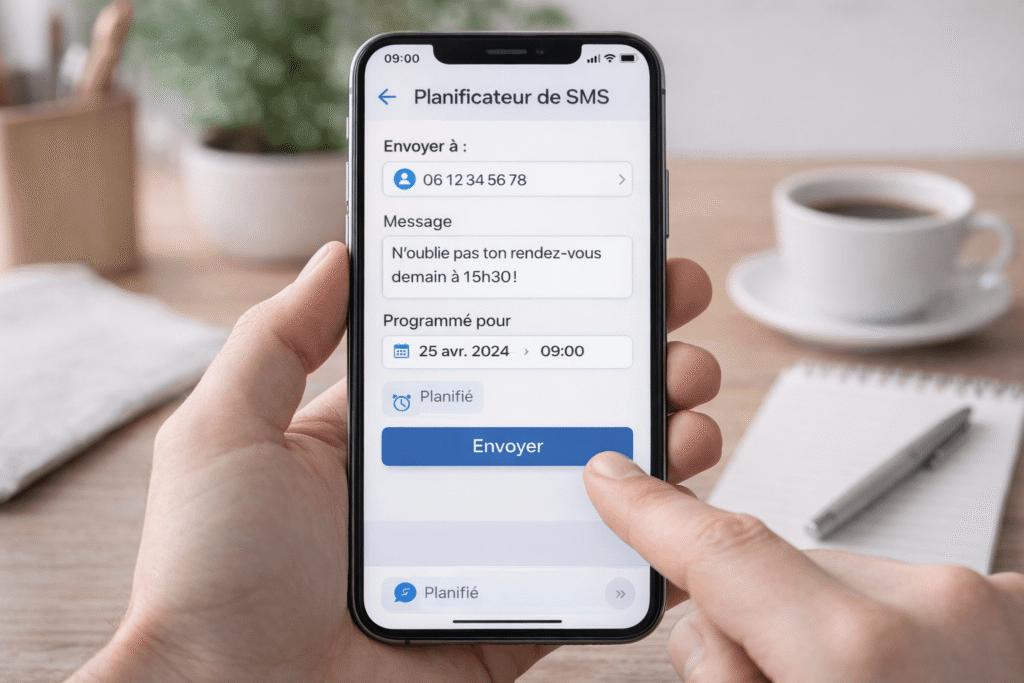
An SMS planner is a tool that allows you to schedule text messages to be sent automatically at a specific date and time.
It is widely used in marketing, business automation, and personal productivity.
How it works
Most SMS planners rely on telecom APIs to send messages through carrier networks.
The typical workflow includes:
- selecting recipients
- writing the message
- choosing a date and time
- automated delivery
Why use an SMS planner?
Time efficiency
Automating SMS removes repetitive tasks and ensures messages are sent even when you’re unavailable.
Better timing and engagement
Sending messages at the right moment significantly improves performance. SMS remains one of the most effective communication channels, with extremely high open rates compared to email. If you want to discover more marketing tools, you can take a look at our article called ‘best marketing tools‘.
Scalability and personalization
Modern SMS tools allow bulk messaging while maintaining personalization, improving user engagement and response rates.
Best SMS planner tools
Selection criteria
- ease of use
- delivery reliability
- API integration
- analytics and reporting
Tool comparison
| Tool | Type | Strength | Best for |
|---|---|---|---|
| Twilio | API | Highly flexible | Developers |
| Brevo | Marketing | All-in-one automation | Businesses |
| SMSFactor | Professional | Simple interface | Companies |
| Google Messages | Mobile | Built-in scheduling | Personal use |
How to choose the right SMS planner
Define your needs
- message volume
- use case (marketing, reminders, personal)
- technical level
Test before committing
Most platforms offer free trials. Testing helps validate performance and usability.
How to schedule SMS effectively
Step 1: Choose your tool
Select a solution aligned with your needs.
Step 2: Write your message
- keep it short
- make it clear
- include a call to action
Step 3: Choose the right timing
Avoid sending messages too early or too late.
Step 4: Track performance
- delivery rate
- response rate
- click-through rate
Common mistakes to avoid
- sending too many messages
- ignoring personalization
- poor timing
- not analyzing results
Conclusion
A SMS planner is a powerful tool for structuring and automating communication.
When used correctly, it allows you to:
- save time
- improve organization
- increase message effectiveness
In a modern digital strategy, it quickly becomes essential.